
www.indo-industry.com
22
'26
Written on Modified on
bp expands Indonesia portfolio with three new production sharing contracts
The new production sharing contracts aim to strengthen the company’s upstream presence and create new exploration opportunities near existing LNG infrastructure and key energy regions.
www.bp.com
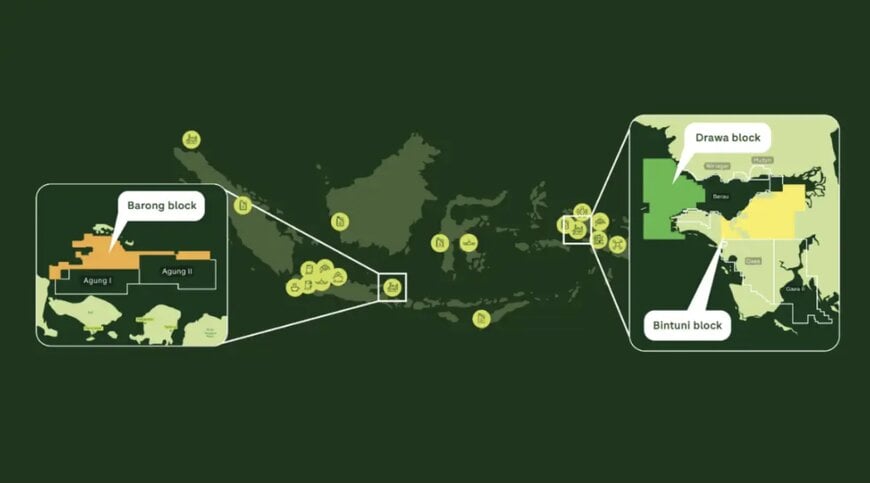
BP has expanded its upstream exploration footprint in Indonesia by signing three Production Sharing Contracts for offshore blocks.
The cooperation involves the execution of exploration blocks near existing infrastructure to enable short-cycle gas developments within the regional energy framework. This technical solution addresses the requirement for enhanced energy security and resource optimization across the Southeast Asian oil and gas sectors.
Upstream Infrastructure Integration and the Digital Supply Chain
The relevance of these upstream agreements stems from the operational necessity to connect new exploration assets directly into established production pipelines, maximizing the efficiency of the digital supply chain. Formally finalized during the Indonesian Petroleum Association Convention and Exhibition 2026, held in Jakarta, the contracts raise the company’s total participation in the country to 11 oil and gas blocks. By selecting blocks adjacent to existing facilities, operators can implement localized pipeline routing and shared processing topologies, mirroring the unified data layers found in a modern automotive data ecosystem to ensure low operational latency and continuous asset utilization.
Technical Alignment and Short-Cycle Field Development
The strategic framework targets shorter development cycles by leveraging existing liquefaction facilities at the Tangguh LNG complex in Papua Barat. The scope of work encompasses the Bintuni and Drawa exploration blocks, where nearby infrastructure provides an immediate mechanism to process prospective gas reserves without constructing redundant downstream processing elements. Under the second Indonesia Petroleum Bidding Round 2025, administered by the Ministry of Energy and Mineral Resources alongside the regulatory agency SKK Migas, the project utilizes finite geological reviews to bypass prolonged construction timelines, mitigating capital expenditure risks in high-pressure reservoir environments.
Consortium Configurations and Joint Venture Structures
The consortium models are designed to distribute technical execution risk across several globally recognized joint venture entities. For the Bintuni and Drawa blocks, the partnership configuration includes CNOOC Southeast Asia Limited, MI Berau B.V., and Indonesia Natural Gas Resources Muturi, Inc. Additionally, the third contract finalizes a 49% participating interest in the Barong exploration block situated off the coast of East Java, where INPEX Corporation holds a 51% stake and serves as the primary operator. This collaborative industrial structure ensures strict compliance with safety frameworks while supporting regional economic development and energy resilience goals.
Additional Context
This section details technical specifications and competitive benchmarking not included in the original news announcement.
In comparison to frontier exploration blocks that require standalone Greenfield developments from competitors like ExxonMobil or Chevron, the proximity of the Bintuni and Drawa tracts to the Tangguh LNG hub provides a significant infrastructure tie-back advantage. While isolated deepwater projects often demand extensive subsea processing loops and long-distance flowlines that introduce high thermal and pressure drop liabilities, a short-cycle tie-back design lowers field development duration by several years. Technical benchmarks indicate that utilizing pre-existing multi-train LNG infrastructure can reduce initial capital allocation per barrel of oil equivalent by up to 30% compared to independent installations.
Furthermore, the Barong block's position in the East Java basin provides an operational curve optimized for a localized, stable medium-to-long-term demand market, matching the performance required for high-efficiency combined-cycle power architectures across regional industrial grids. This shift from high-risk conventional greenfield development to integrated brownfield expansion reduces potential supply chain points of failure by approximately 15% across maritime energy logistics.
Edited by Romila DSilva, Induportals Editor, with AI assistance.
www.bp.com
