
Teledyne FLIR's Industry-First UL 2684 Listing Gives APAC Fire Engineers a New Benchmark
The listing brings independent validation to Teledyne FLIR thermal image fire detection as Asia-Pacific expands battery storage, data centres, EV charging, and automated industrial infrastructure.
www.flir.com
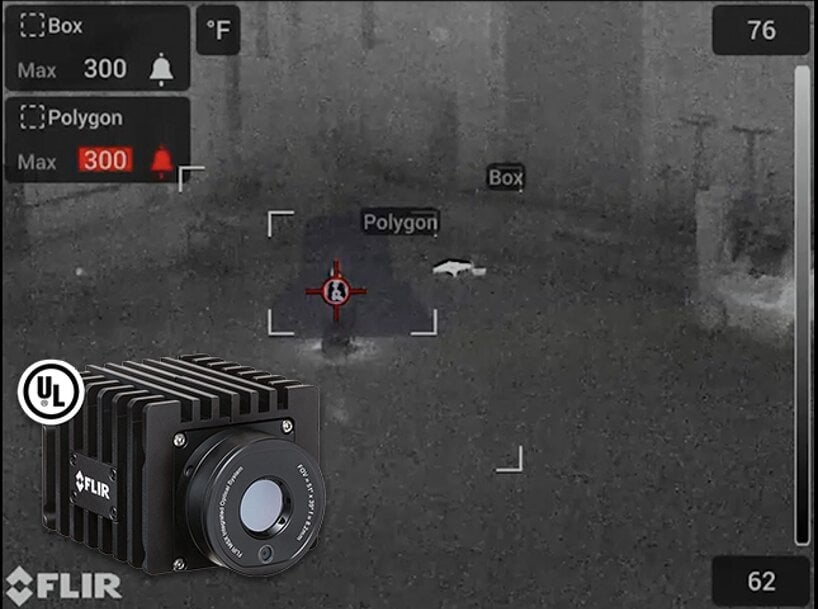
Teledyne FLIR's A40 and A70 (Axx-Series) thermal imaging cameras are the first models to achieve UL 2684 listing. They are listed as thermal image fire detectors under ANSI/CAN/UL 2684, the joint US-Canadian standard for video and thermal image detectors used in fire alarm systems.
The listing means Axx-Series cameras can be incorporated into fire detection systems designed in accordance with NFPA 72, the National Fire Alarm and Signaling Code, which in its 2025 edition created a dedicated category for thermal image fire detection (Sec. 17.12) and requires thermal image fire detection systems to be listed for the purpose of fire detection. For Asia-Pacific, where many codes and approval routes reference NFPA and UL benchmarks, that pairing matters.
Across the region, rapid investment in battery energy storage, data centres, electric vehicle charging, rooftop solar, and automated manufacturing is creating more energy-dense environments in which developing fire risks may begin as abnormal heat. Most APAC markets do not yet have a dedicated product standard for assessing thermal image fire detection.
The listing helps close that evidence gap. It gives fire engineers, consultants, insurers, and asset owners an independently evaluated benchmark when considering Teledyne FLIR thermal image fire detection within performance-based designs, equivalency assessments, and other locally governed approval pathways, such as Performance Solutions under Australia's National Construction Code or Singapore Civil Defence Force (SCDF) submissions in Singapore.
The listing does not replace national codes or local approvals. It strengthens the case made to them: independent evaluation against a published standard rather than the manufacturer's own test data.
Conventional detection responds to the products of combustion: smoke, flame, or heat reaching a detector. By then a fire process is already underway, and in a data hall, a warehouse, or a covered charging structure, high airflow dilutes and carries those products away before they reach a ceiling-mounted device, delaying the alarm further.
A thermal image fire detector works earlier in that sequence: it measures the temperature of the asset itself, before there is smoke to travel. Measurement areas are drawn over the live image, and each is tracked for minimum, average, and maximum temperature. An alarm can be triggered by an absolute limit, by one area drifting away from another, or by rate of rise. That last matters most in practice: a machine that has always run warm is not a fire condition, but the same machine climbing steadily through a shift is an early warning.
In a battery energy storage system, that means a cell or module moving out of its normal thermal profile. In an EV charging hub, a connector, cable, or vehicle battery heating under load. On a rooftop solar array, a DC connector, a combiner box, or an inverter. On a production line, a motor, a bearing, or a hydraulic run. In a data centre, a busbar joint or a power distribution unit.
Finding a thermal anomaly early means it can be investigated and isolated while it is still a maintenance task: a single rack or container dealt with, rather than a hall evacuated or a container written off along with the ones beside it. On high-value assets, and on critical infrastructure where downtime carries a public cost, that difference is the business case.
Detection stays thermal, while an integrated visible camera provides verification, so an alarm arrives with an image of the scene at the moment it triggered. An operator can check it before anyone stops a line. Analysis runs on the camera, so an alarm does not wait on a server or a network link. When alarm conditions are met, the cameras initiate fire alarm events through compatible fire alarm control systems, and they integrate over the protocols the plant already runs. Coverage is line-of-sight, which makes this a tool for defined high-value assets, specified alongside conventional detection rather than as a replacement for general area coverage.
"Fire engineers across Asia-Pacific have been asked to evaluate this technology without a product standard to point to," said Matthew Hasty, Global Vertical Director for Science, Automation, and Early Fire Detection at Teledyne FLIR. "The UL 2684 listing changes that. Performance-based submissions across the region now have independent, standard-based evidence behind them, and that is what owners, insurers, and consultants have been asking us for."
The battery plants, charging hubs, data centres, and rooftop arrays being commissioned this year need that evidence now, and it is available today.
For more information about Axx-Series thermal imaging cameras and Teledyne FLIR early fire detection solutions, visit flir.com/fire-life-safety.
