
www.indo-industry.com
22
'26
Written on Modified on
Johnson Controls powers sustainable performance at Jakarta’s Thamrin Nine development
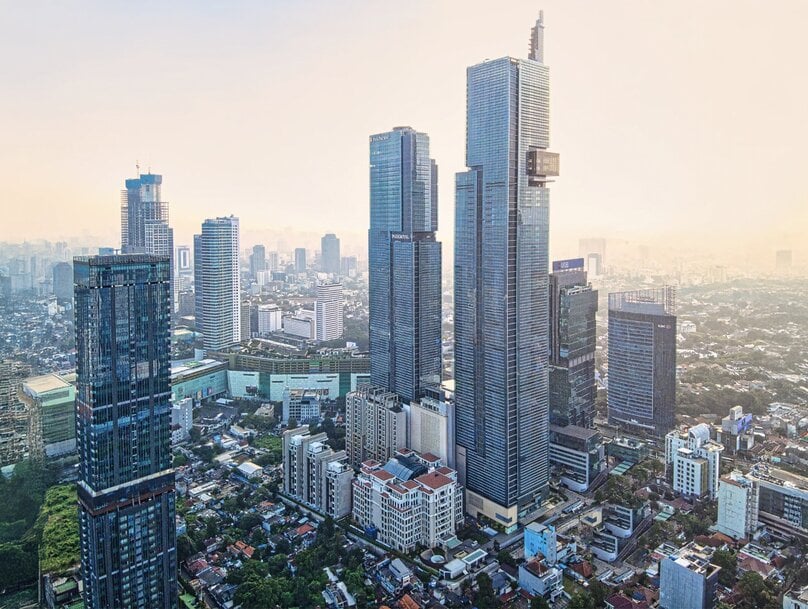
Johnson Controls has deployed advanced cooling, building controls, and AI-driven energy management technologies at Thamrin Nine, helping the landmark development improve efficiency, reduce operating costs, and strengthen long-term resilience.
www.johnsoncontrols.com
Application Area: Commercial Automation / Energy Management
Industry Sector: Real Estate / Sustainable Infrastructure
High-rise architectural projects in tropical climates present intense operational demands for climate control and power consumption. At the Thamrin Nine multi-use complex in Jakarta, the management required an infrastructure solution capable of handling highly variable cooling loads across diverse zones, including corporate offices, luxury hotels, and public spaces.
The core operational objective was to establish sustainable urban growth by minimizing energy waste and lowering long-term maintenance risks. To achieve this goal, the building required an advanced technical setup capable of maintaining strict climate control across massive vertical distances while optimizing overall resource consumption.
Distributed cooling infrastructure and intelligent automation
To overcome these space and climate challenges, a hybrid approach combining decentralized heavy equipment and predictive digital architecture was selected. The mechanical configuration utilizes high-efficiency YORK chillers organized in a strategically distributed plant design. This layout includes a specialized, high-altitude installation located on Level 55 of the Autograph Tower, segmenting the delivery of cooling to accommodate the extreme vertical scale of the property.
The control layer features the Metasys Building Management System paired with the OpenBlue AI-powered ecosystem. This platform was selected due to its capacity for real-time, predictive control. By continuously analyzing real-time occupancy patterns, local weather variations, and system demand, the software proactively adjusts cooling performance to eliminate unnecessary power draw.
Deployment and systems integration
The implementation process involved complex mechanical engineering to distribute the physical cooling components across different levels of the supertall structure. Advanced piping networks and system integration techniques were used to connect the scattered mechanical components into a cohesive network.
The software layer was overlaid across all building operations, establishing a centralized point for horizontal data transmission. This setup allows the building management system to monitor equipment health continuously, creating a highly resilient operational model that prevents unexpected system failures.
Quantifiable efficiency and sustainability results
The deployment of the integrated cooling and smart building systems delivered verified performance improvements to the development:
- Energy Savings: The multi-use complex is projected to achieve up to a 30% reduction in total energy consumption.
- Utility Cost Reduction: Operating expenditures specifically related to cooling and lighting infrastructure decreased by approximately 20%.
- Asset Longevity: The predictive control framework extends the operational lifecycle of the heavy machinery.
- Risk Management: Continuous automated adjustments minimized operational maintenance risks and prevented system breakdowns.
Additional Context
The distributed chiller plant design implemented in this supertall complex represents a critical departure from traditional centralized basement configurations. By placing high-capacity chillers on Level 55, the system minimizes the massive hydraulic static pressure that typically compromises pumping efficiency in vertical developments over 300 meters. In competitive benchmarking, this configuration reduces the parasitic pumping energy losses by up to 15% compared to standard single-location centralized plants, proving that physical height limitations can be mitigated through strategic machinery placement.
Edited by Romila DSilva, Induportals Editor, with AI assistance.
The distributed chiller plant design implemented in this supertall complex represents a critical departure from traditional centralized basement configurations. By placing high-capacity chillers on Level 55, the system minimizes the massive hydraulic static pressure that typically compromises pumping efficiency in vertical developments over 300 meters. In competitive benchmarking, this configuration reduces the parasitic pumping energy losses by up to 15% compared to standard single-location centralized plants, proving that physical height limitations can be mitigated through strategic machinery placement.
Edited by Romila DSilva, Induportals Editor, with AI assistance.
